
Cowichan Bay, BC
Moss Removal in Cowichan Bay, BC
Hand moss removal for the village on the water and the farm properties on the estuary flats behind it.
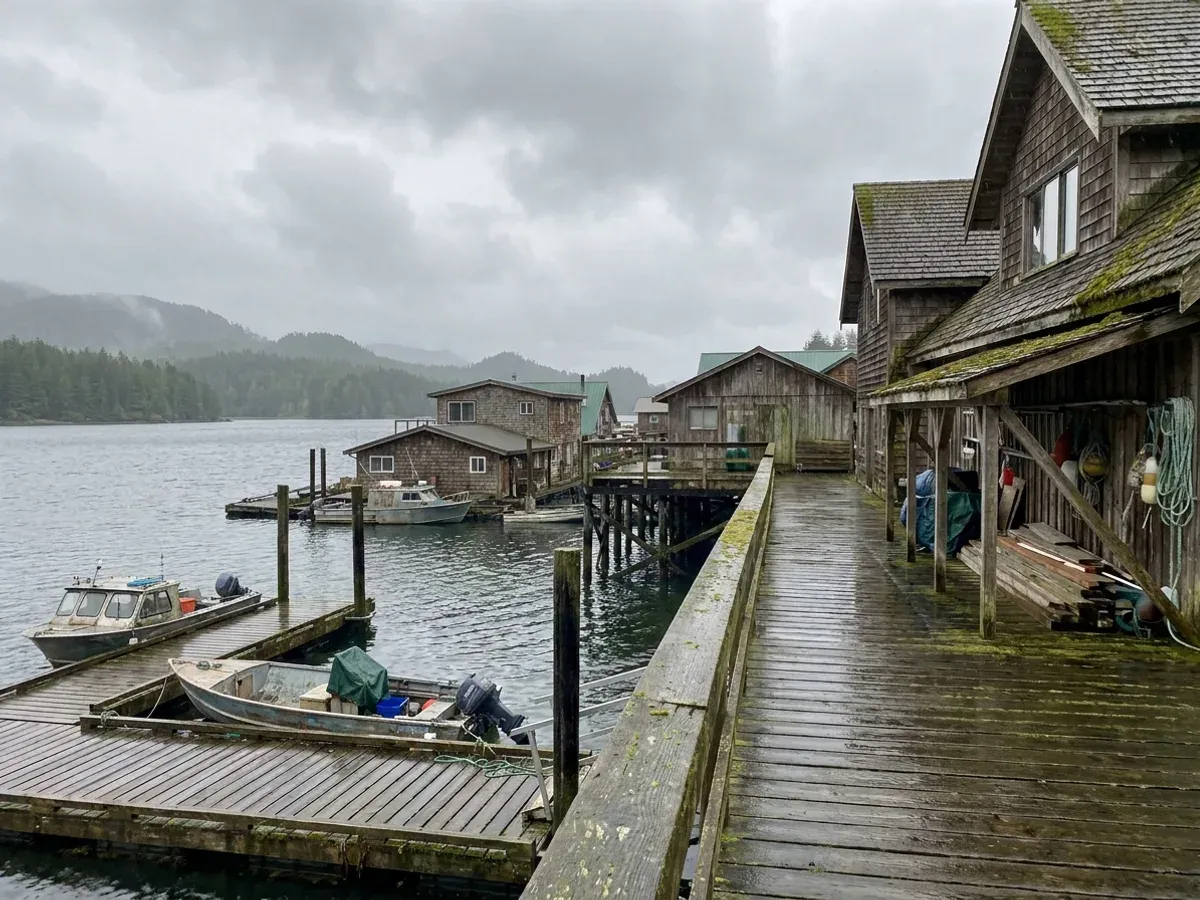
Cowichan Bay is a working fishing village built out over the water. The row of buildings along the waterfront and the floating homes beyond them sit on pilings above the bay, and everything here lives in the marine layer — salt air, damp off the water for most of the year, and a great deal of exposed timber that never gets a proper chance to dry.
Damp that does not lift
Humidity is the thing that sets this place apart from the rest of the valley. Fog sits over the estuary on still mornings, and surfaces facing the water hold dew long after an inland roof has dried off. Through the wet months from October to March, that means shingle roofs, decking, railings, ramps and walkways stay wet more or less continuously. Moss and algae do not need shade to get going here the way they do under the firs at Shawnigan — the constant moisture is enough on its own.
Exposed timber is where it shows first. Ramps down to the docks, plank walkways, stair treads and railings all go green on the top surfaces and along the joints, and the growth holds water directly against the wood. That is a slip hazard before it is a rot problem, and both are worth heading off.
Working over the water
Roofs above the bay change how the work is done. Access has to be thought through properly on a building on pilings, and there is no version of this that involves blasting debris off a roof into the water below. Asphalt shingle must never be pressure washed anyway — the pressure carries away the mineral granules that protect it — and the same goes for cedar, which only holds more moisture once its surface is torn up.
So it is hand work. Moss is lifted off, the debris underneath it is cleared and collected rather than washed away, and the surface is treated so the remaining growth dies back and weathers off over the following months. Salt-damp buildings tend to regrow faster than dry inland ones, which is exactly why the treatment step matters here.
The flats behind the village
Not everyone in Cowichan Bay is on the water. Behind the village the land rises into farmland on the Cowichan River estuary flats, and those properties have a different problem set: low, damp ground where fog settles and lingers, big bigleaf maple and hedgerow trees along the river and the field edges, and a house plus a barn or two collecting the leaf drop. Gutters pack solid with maple leaves, water backs up under the roof edge and runs down the fascia, and the shaded north slope of the roof carries the heaviest moss.
Down at Hecate Park and along the village frontage the pattern is different again — more salt, more wind, less overhanging tree.
Windows facing the water
Frames on the water side take a beating. Salt film on the glass gets noticed; the moss packed into the frame channels, the sills and the weep holes usually does not. Once the weep holes are blocked, water sits in the bottom of the frame with no way out, and that is where rot starts on an older wooden window.
We are local to the Cowichan Valley, licensed and insured, and comfortable working around the village, the docks and the farms behind them. Get in touch and we will come and look at what you have.
What we do in Cowichan Bay
Roof Moss Removal
Careful hand removal of moss from asphalt, tile, metal and cedar roofs across the valley.
Moss Treatment & Prevention
Ongoing treatment and prevention work that slows regrowth after a roof has been cleared.
Driveway & Sidewalk Moss Removal
Removing slippery moss and algae from concrete driveways, pavers, walkways and exposed aggregate.
Window Moss Removal
Clearing moss and algae from window frames, sills, tracks and blocked weep holes.
Moss removal in Cowichan Bay — common questions
Is salt air different from ordinary rain when it comes to moss?
The salt itself is not what feeds moss — moisture is. What the bay does is keep humidity high and surfaces damp far longer than inland, so growth gets more hours of the conditions it needs. Salt matters more for the timber and the fixings underneath.
Can you work on the buildings and floating homes out over the water?
Access is the deciding factor rather than the moss itself, so it is worth a look before anything is quoted. What we will not do is pressure wash debris off a roof into the bay — the work is done by hand and the debris is collected.
What about the decks, ramps and wooden walkways?
Exposed timber right by the water is often in worse shape than the roof. Moss and algae on plank walkways and ramps are a genuine slip hazard, and the growth holds water against the wood, which is how the boards start to go soft.
We are up on the estuary flats rather than on the water. Is it the same job?
The conditions shift. Out on the flats it is fog settling on low ground and heavy leaf drop off maple and hedgerow trees, so gutters and shaded roof slopes are the priority. In the village it is constant marine damp and exposed timber.
Other communities we cover
Moss removal in Cowichan Bay
Free quotes, licensed and insured, and a straight answer about what your roof actually needs.