
Cowichan Valley
Keeping Moss From Taking the Roof Back
A cleaned roof is a starting point rather than a finish line, and what you do afterwards decides how fast the moss comes back.
- Regrowth caught while it is thin enough to treat rather than remove
- Overhanging branch and debris problems identified, not just the moss
- Ridge strip options explained for your roof shape and material
- Treatment matched to roof material and to what is downhill of it
- An interval based on your canopy and slope rather than a stock answer
Here is the honest version, and it is the part most people are not told when the ladder comes down. Moss will come back. On the coast of Vancouver Island that is not a failure of the cleaning, it is the climate doing what it does.
Spores are already in the air and already on your neighbour's fence. What decides whether they take hold on your roof is not luck. It is moisture, shade and debris, and all three of those can be changed.
Why This Valley Grows Moss So Well
The Cowichan Valley sits in the Coastal Douglas-fir zone. From roughly October through March the roof surface barely gets a chance to dry out, and moss does its real growing in exactly that stretch. The dry summer that follows browns it off and makes it look dead, which is why people are surprised when it greens up again with the first serious rain.
Then there are the trees. Douglas fir, western red cedar and bigleaf maple are the character of this valley and they are also the reason a lot of roofs stay damp. Overhanging branches shade the surface and drop needles and leaves that hold water against it. A roof under a canopy is working against the weather every single day of the wet season.
The Levers That Actually Work
Treatment on its own is only one part of it. The things that meaningfully slow regrowth are physical as much as chemical.
- Cutting overhanging branches back so light and moving air reach the roof. This is the single biggest change most homeowners can make, and it works on every roof type.
- Keeping gutters and valleys clear of needle debris. Debris is a seed bed. Moss establishes in the packed needles first and spreads onto the shingles from there.
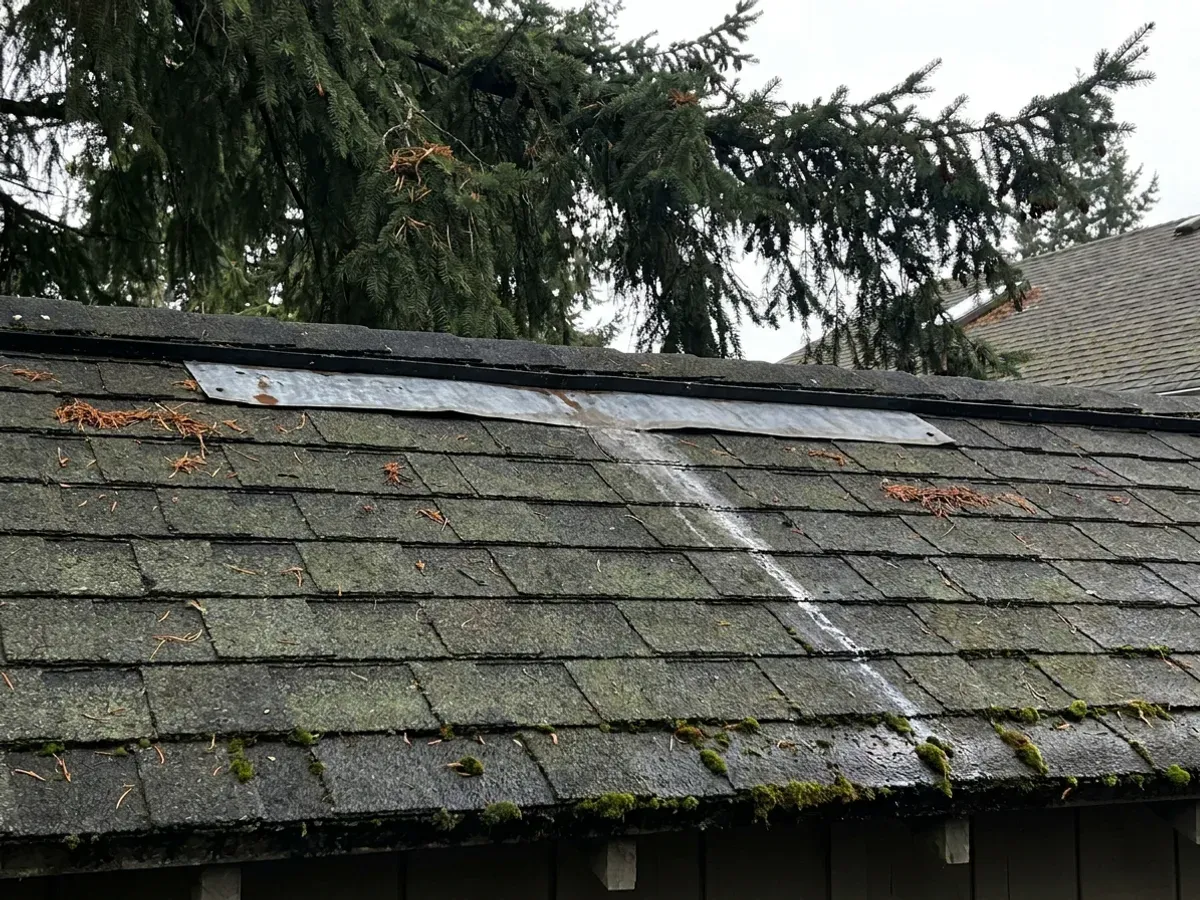
- Zinc or copper strips at the ridge. Rain washes traces down the slope and gives a slow, ongoing suppressing effect over the surface below.
- Periodic treatment of the surface before growth thickens up, rather than waiting until there are cushions of it in the valleys.
None of these stop moss permanently. Together they change the pace of it, and pace is the whole game on this coast.
What Treatments Are and What They Are Not
In plain terms there are two families of product in normal use. Zinc-based and iron-based treatments, which suppress and kill growth on the surface, and soap-based products built on potassium salts of fatty acids, which work faster and break down more readily.
What none of them do is scrub the roof for you. A treatment kills what is living and lets rain and wind carry the remains off over time. If a roof is carrying heavy established moss, it needs the physical removal first and the treatment second. Treating a thick mat and expecting it to disappear is a way to spend money and stay disappointed.
There is also the question of where it all ends up. Whatever is applied to a roof leaves by the downspout, and downhill of that are beds, lawns, ditches and eventually the Cowichan River system. Rate, placement and protecting what is below the work are part of the job rather than an afterthought.
Ridge Strips and the Slow Approach
Metal strips at the ridge are the closest thing to a passive prevention measure. They do nothing dramatic. Every time it rains, trace amounts wash down the slope and make the surface a slightly less welcoming place for spores to settle.
The effect is strongest near the top of the slope and weaker by the time water reaches the eaves, which matters here, because the lower third of a roof is exactly where our debris collects and where moss usually starts. Strips are a useful piece of a plan, not the plan.
What a Sensible Interval Looks Like
There is no universal number, and anyone quoting you one has not seen your roof. The interval depends on how much canopy is over it, which direction the main slopes face, and how much needle debris comes down in the fall.
A roof in the open with south-facing slopes and no trees near it can go a long while between visits. A north-facing slope under a fir canopy needs looking at far more often, and letting it run means paying for a full hand removal again instead of a light maintenance visit.
A reasonable rhythm for most homes here is a look after the fall needle drop and again before the wet season really settles in, with treatment applied when the surface calls for it rather than on a fixed date. The point is catching growth while it is thin. Thin moss is a treatment. Thick moss is a removal.
If you want the short version — get the branches back, keep the debris moving, and deal with growth while it is still a green film rather than a cushion.
How we do it
- 01
Reading the roof and the yard
We look at slope direction, canopy cover, gutter condition and where growth is starting rather than only where it is obvious. The causes are usually visible from the ground once you know where to look.
- 02
Clearing the seed beds
Needle debris in the gutters, valleys and behind the chimney comes out first. Treating a surface while the debris that feeds it is still sitting there is wasted effort.
- 03
Applying treatment
The surface is treated at the right rate for the material, with beds, ponds and downspout outlets protected before anything is applied. Growth dies back and weathers off gradually rather than washing away on the day.
- 04
Fitting prevention measures
Where the roof suits it, zinc or copper strips go in at the ridge so rain carries a slow suppressing effect down the slope. We will tell you honestly if your roof shape means the benefit is limited.
- 05
Setting the return point
We agree what your roof actually needs based on its canopy, aspect and debris load, rather than a stock interval. You get told what to watch for so you can call it earlier if something changes.
Moss Treatment & Prevention across the valley
We cover the whole Cowichan Valley. Pick your community to see what the conditions are like there.
Moss Treatment & Prevention — common questions
If moss always comes back, what am I paying for?
You are paying for how slowly it comes back. A treated and maintained roof carries a thin film that a light visit handles, while a neglected one grows cushions that need full hand removal and that lift shingle edges in the meantime. The work changes the pace, not the biology.
Do zinc or copper ridge strips really do anything?
They give a real but slow effect. Rain picks up traces from the metal and carries them down the slope, which discourages spores from settling. The effect is strongest near the ridge and fades toward the eaves, so strips work well alongside debris clearing rather than instead of it.
Will the treatment kill my plants or get into the ditch?
It can if nobody plans for it, which is why runoff is handled before anything is applied. Beds, shrubs, ponds and downspout outlets are protected, and rate matters as much as product. Everything downhill of a roof eventually reaches the ditches and the river system.
Should I just cut the trees down?
Rarely, and we would not push you toward it. Cutting overhanging branches back so light and air reach the roof does most of the work without taking a mature Douglas fir or maple out of your yard. The goal is a roof that dries after rain, not a bare lot.
Can treatment alone handle a roof that is already thick with moss?
No. Treatment kills living growth and lets it weather off, but a thick established mat holds water and stays put long after it is dead. Heavy growth needs physical removal by hand first, and then treatment keeps the cleared surface from filling back in.
Get the moss off before the winter rain sets in
Free quotes across the Cowichan Valley. Tell us about your roof and we will tell you what it needs.