
Crofton, BC
Moss Removal in Crofton, on Osborne Bay
Salt air off the bay and sheltered, shaded streets above the water give Crofton two very different kinds of moss problem.
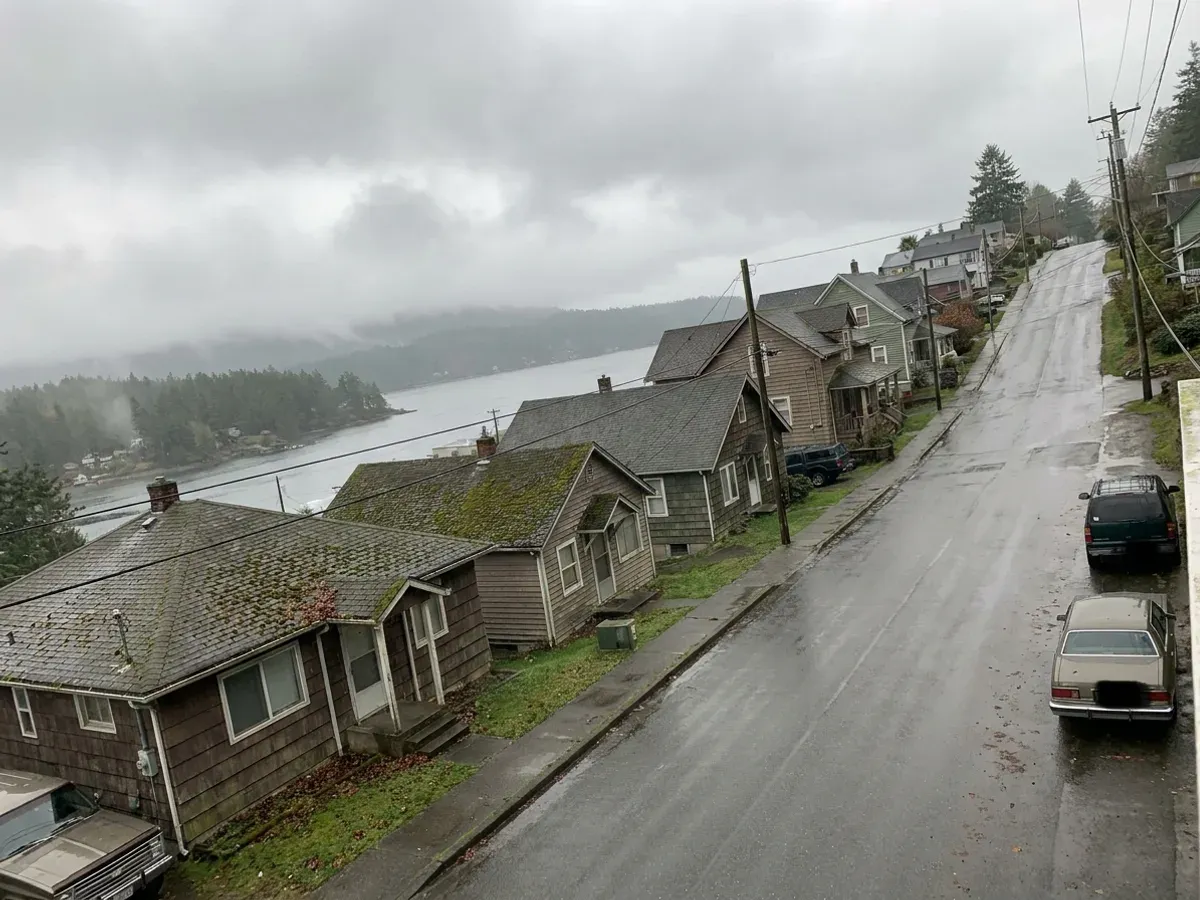
Crofton is a small waterfront mill town on Osborne Bay, and as far as moss is concerned there are really two versions of it.
The waterfront row, and the streets behind it
Houses on the water take the weather. They get wind and open sky, and their roofs dry out faster than most in the valley — but they also sit in constant marine moisture and salt air off the bay, so nothing is ever properly dry for long. Growth on those roofs tends to be thinner and more widespread: an algae stain and a fine moss across the whole slope rather than thick cushions in one corner.
Move a few streets uphill and it inverts. The compact grid of modest older houses on the slope above the water is sheltered from the wind that was doing the drying, and the mature trees through those streets shade them for much of the day. That is where the thick moss is — the lower third of the roof, the shaded pitch, and anywhere a branch reaches out over the roofline. Two houses four blocks apart in Crofton can genuinely need different work.
Simple roofs, but not new ones
Most of the townsite is modest mill-era and post-war housing on straightforward roof shapes. That is good news in one respect: fewer valleys and dormers to trap debris than the heritage houses up the coast, and safer, more predictable access. What these roofs do have is age, and moss on an aging asphalt roof is not a cosmetic matter. It wicks water under the shingle edges and lifts them, then freeze-thaw cycling works them further apart until the roof lets water past.
Shingles are cleared by hand. Asphalt is never pressure washed, because the pressure takes off the mineral granules that protect the shingle from UV and costs the roof years of service. After the hand removal the roof is treated, and what remains dies back and weathers away over the months that follow.
Ground surfaces in marine air
Driveways, carport slabs and the concrete paths beside these houses green up fast in constant marine damp, and on the sloped lots above the bay that becomes slippery. Slip hazard is the real reason to deal with it, well ahead of how it looks. Shaded ground on the streets behind the waterfront is always the worst of it.
Gutters fill with debris off the roof and out of the trees, and a blocked gutter pushes water back under the roof edge and down the fascia. On a house already dealing with salt-laden air on its trim, keeping water moving off the roof and away from the fascia is worth the visit on its own.
We cover Crofton as part of the valley: the waterfront, the grid on the slope above it, the streets near the ferry terminal and out along Osborne Bay Road. Local, hardworking, licensed and insured. Request a quote and we will tell you what your roof actually needs.
What we do in Crofton
Roof Moss Removal
Careful hand removal of moss from asphalt, tile, metal and cedar roofs across the valley.
Moss Treatment & Prevention
Ongoing treatment and prevention work that slows regrowth after a roof has been cleared.
Driveway & Sidewalk Moss Removal
Removing slippery moss and algae from concrete driveways, pavers, walkways and exposed aggregate.
Window Moss Removal
Clearing moss and algae from window frames, sills, tracks and blocked weep holes.
Moss removal in Crofton — common questions
Does the salt air off Osborne Bay make the moss worse?
It keeps surfaces damp. Marine air holds moisture against the roof, the trim and the concrete even on days when it is not raining, so nothing dries out completely. On the waterfront row that usually shows up as thin, widespread growth over the whole roof rather than heavy patches.
Our driveway is green and slippery all winter. What can be done about it?
Moss and algae on driveways and paths is primarily a slip hazard, and it is worst on shaded and sloped ground, which describes a lot of Crofton. The surface is cleaned to what the material can take and then treated so it is slower to return.
How often should a roof in Crofton be looked at?
It depends far more on the lot than on the town. A roof out in the wind on the waterfront holds moss differently from one under trees three streets up. The most useful thing is to have someone look at the shaded pitch and the lower third of the roof, since that is where it starts.
Do you work on the older mill-era houses on the streets above the water?
Yes, and they make up much of the work here. Simple roof shapes and older shingle, usually with mature trees nearby. Older shingle gets handled by hand rather than scrubbed, because it is more brittle and has less margin left in it.
Other communities we cover
Moss removal in Crofton
Free quotes, licensed and insured, and a straight answer about what your roof actually needs.